
St Edmund Hall opens new Passivhaus student accommodation
8 Oct 2026
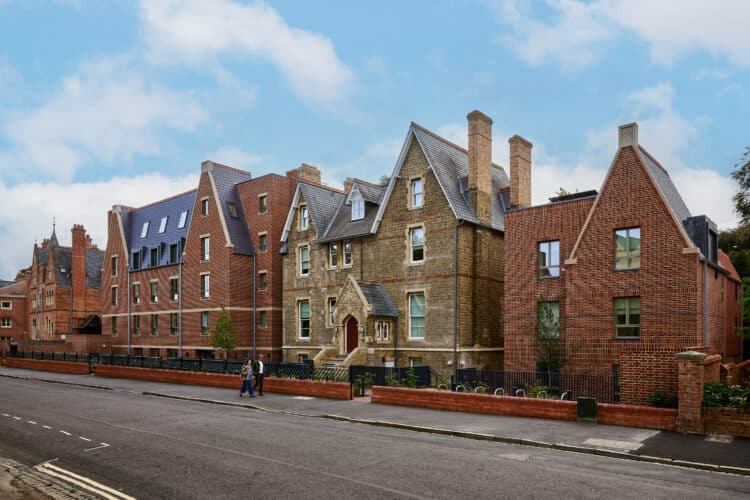
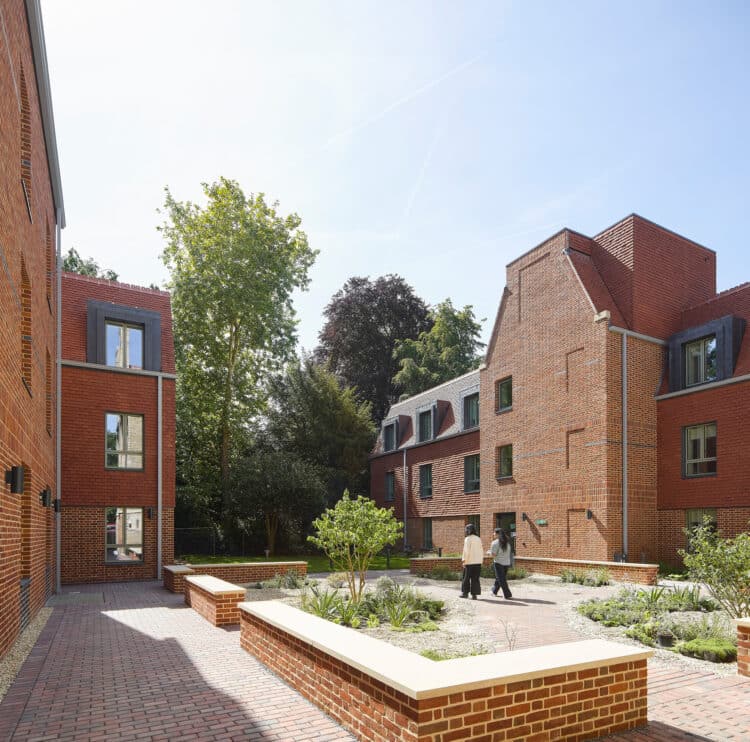
On Friday 2 October, St Edmund Hall officially opened its new 127 bedroom student accommodation, Norham St Edmund, in Norham Gardens, North Oxford. The site comprises three new Passivhaus certified buildings: the Willis Building, Ashton House and Elliott House, and a low carbon retrofit of an 1874 Victorian villa, Dunbabin Lodge.
St Edmund Hall is the first college to build Passivhaus certified student accommodation in Oxford. Receiving this certification requires exceptional levels of performance across multiple criteria, including insulation, airtightness, manufacture, heating and cooling, energy, glazing, and ventilation. Norham St Edmund’s three new buildings have an energy demand 70% lower than that of typical modern buildings and are delivered at a comparable cost to conventional new-build construction. The development is an exemplar of climate-resilient student housing for the future.
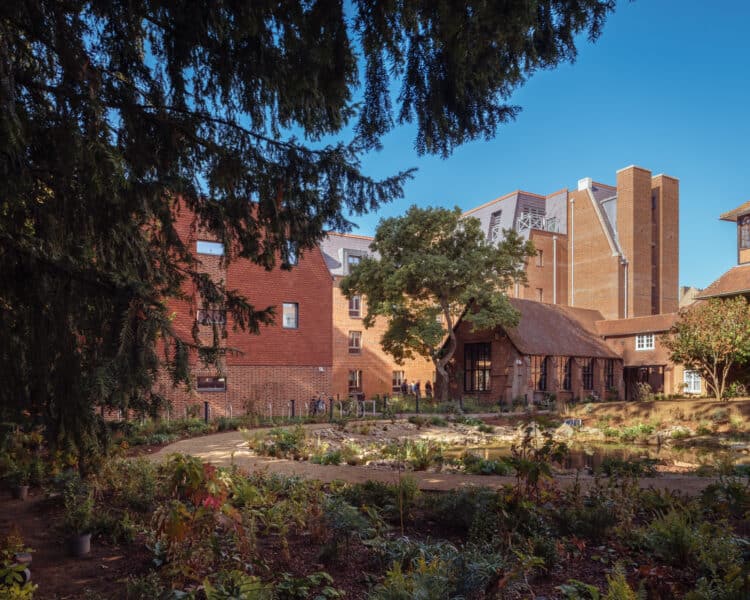
Ecology and biodiversity are also at the heart of the landscape design at Norham St Edmund. The creation of five new gardens around the site has achieved an 88% biodiversity net gain, with early evidence of potential benefits for bats and other wildlife already emerging. Situated in the historic North Oxford Victorian Suburb Conservation Area, the development demonstrates how modern architecture and low energy design, along with space for wildlife, can be achieved even within one of Oxford’s most historically important neighbourhoods.
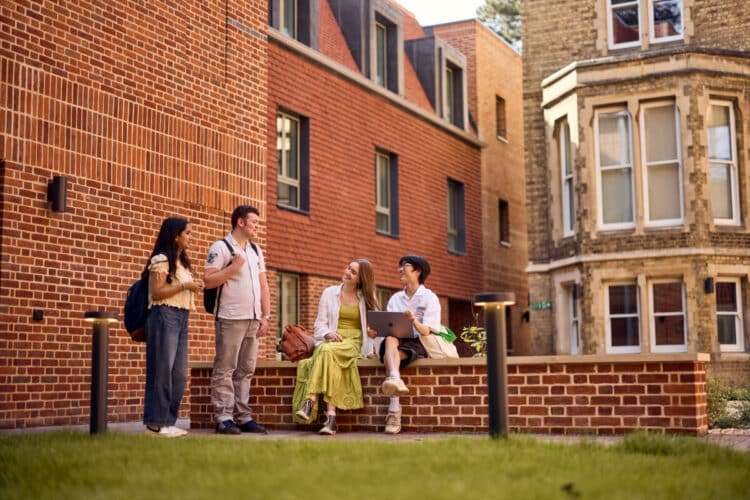
With the completion of Norham St Edmund, the College can, for the first time in around 150 years, accommodate all of its undergraduates for the entirety of their degree. It represents the most significant transformation of the College estate in the past 20 years and will deliver lasting academic, social and sustainability benefits for future generations of students.
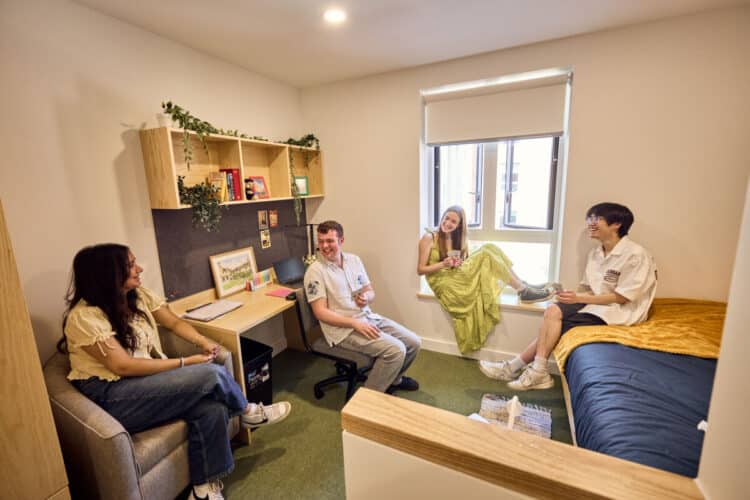
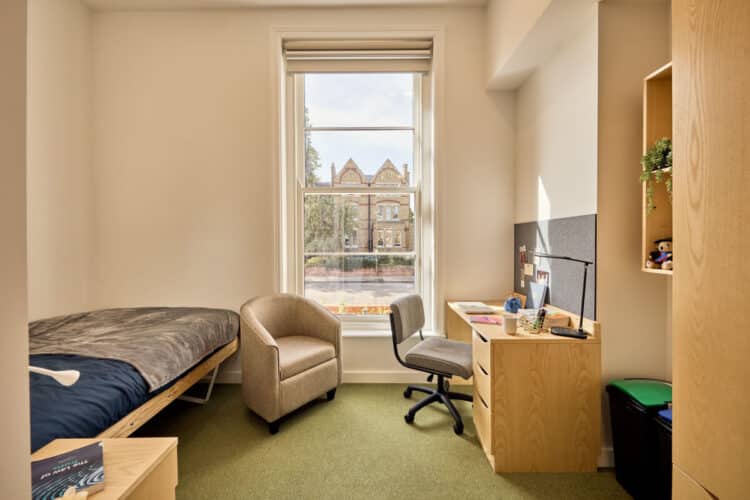
The new accommodation, designed by Wright & Wright, consists of 127 bedrooms, of which 91% are en-suite, and includes five accessible rooms. In addition, there are two new common rooms, indoor and outdoor study and social spaces, with views over University Parks.
Principal Professor Baroness Willis, CBE, FRS, said: “It gives me enormous pride to see the new Norham St Edmund building open its doors to students. We set out with a strategic vision to deliver the world class student experience for which the Hall is known, alongside the highest environmental standards, and Norham St Edmund delivers on that vision. It is much more than student accommodation. It represents the shared commitment of the St Edmund Hall Governing Body, Fellows, students, staff and alumni to create exemplar buildings that address both our climate and nature challenges – challenges which will impact current and future generations alike. This project has created high-quality, environmentally sustainable and accessible accommodation, allowing our undergraduate students to not only learn about the need to address these global challenges, but also to live in buildings that demonstrate how we can begin to meet them.”
The Rt Hon Lord Hague, Chancellor of the University of Oxford and College Visitor, commented: “Since I became Visitor at St Edmund Hall, I have been impressed with its commitment to environmental sustainability and improving the student experience. Norham St Edmund is a world leading blueprint for future student accommodation projects and sustainable building design, both in Oxford and beyond. I look forward to seeing it serve a thriving college community for generations to come.”
Naila Yousuf, Partner at Wright & Wright, the architects of the development, said: “At Norham St Edmund, architecture, landscape, sustainability and craft come together to create student accommodation for the future, responding both to the climate emergency and the unique historic context of North Oxford. From the outset, St Edmund Hall was unwavering in its vision that the project should set the highest benchmark for sustainable design, through which the student experience could also be democratised. The result is a collection of carefully crafted cross laminated timber Passivhaus buildings with a distinctive architectural character and a remodelled Victorian villa, all set within a richly planted landscape.”
Adam Cripps, Regional Design & Preconstruction Lead at SDC, the Hall’s contractor, said: “SDC are incredibly proud to have delivered this landmark development for St Edmund Hall. The project’s successful completion reflects the commitment, technical expertise and close collaboration of the College, the design team, and our specialist supply chain partners. Norham St Edmund sets an exceptional benchmark for low-energy, high-quality student accommodation, and we’re proud to add it to our growing portfolio of Passivhaus projects.”
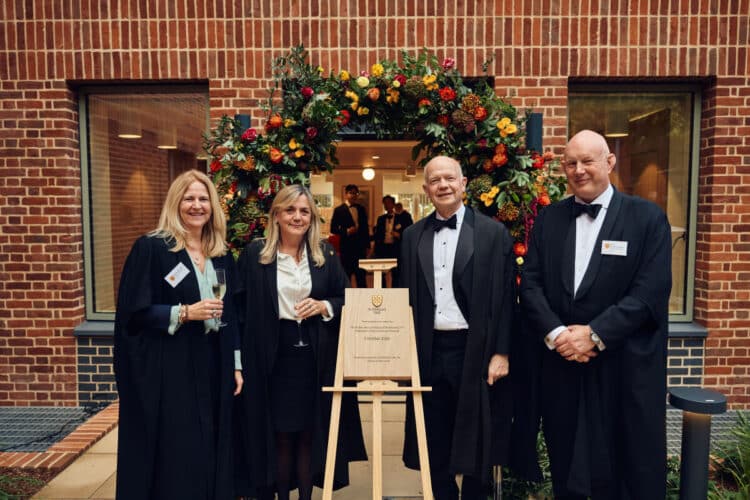
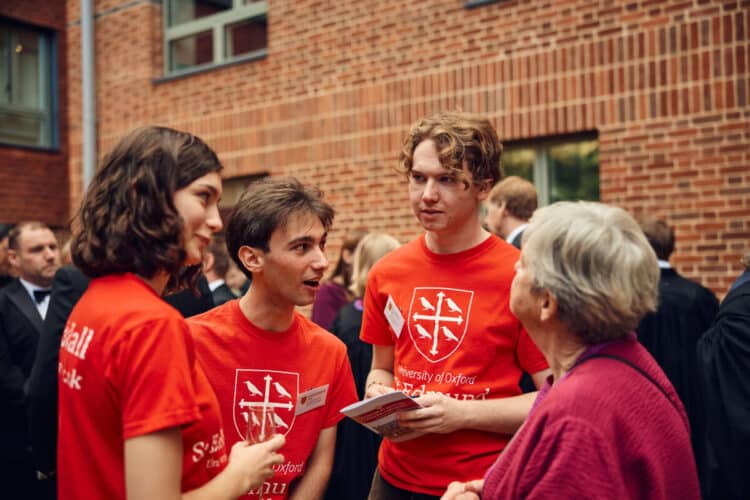
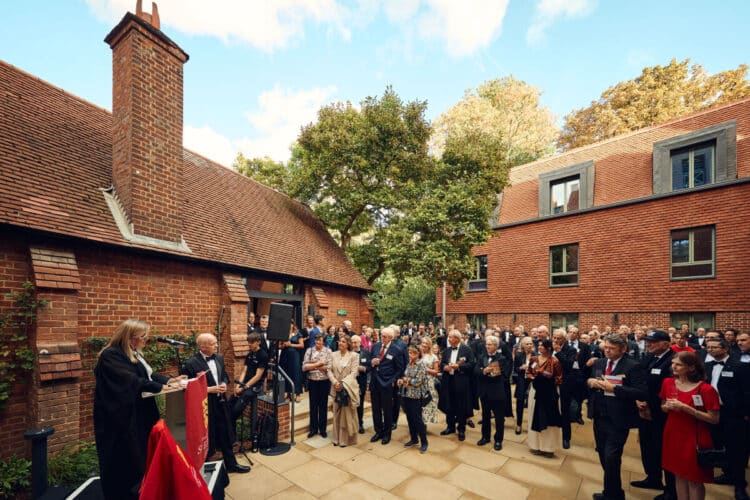
The Hall held two events to celebrate alumni and supporters who gave to the Norham St Edmund redevelopment campaign. On 2 October, the Chancellor of the University of Oxford, The Rt Hon Lord Hague and the Principal of St Edmund Hall, Professor Baroness Willis, opened the buildings with a traditional ribbon-cutting ceremony and speeches to a gathering of 170 alumni, students, Fellows, staff and friends of the Hall. Earlier, on 5 September, the Hall welcomed alumni for afternoon tea, tours and a talk on the art collection housed within the buildings, offering an opportunity to showcase the new site.
This is a unique, once-in-a-generation development for St Edmund Hall which could not have been achieved without the support of the Governing Body Fellows, the Hall community, project partners and the unwavering generosity of the alumni. Together, we are empowering more students than ever to live where they learn, here in the St Edmund Hall community.
Sustainability highlights
- 88% biodiversity net gain
- Passivhaus Classic certification
- Up to 70% reduction in operational energy demand compared to standard regulations compliant build
- Cross Laminated Timber (CLT) structural system
- 100% fossil fuel-free in operation
- Green roofs with built-in solar panels
- Retrofit of 1874 Victorian villa using breathable, low carbon materials, including cork based insulating plaster and wood fibre
- Climate resilient tree species introduced, including endangered and rarely found in the wild species selected in collaboration with Oxford Botanic Garden
- 85,000 handmade red clay hung tiles produced by Keymer, the UK’s last manufacturer of handmade tiles, using clay from its Wealden quarry in Sussex
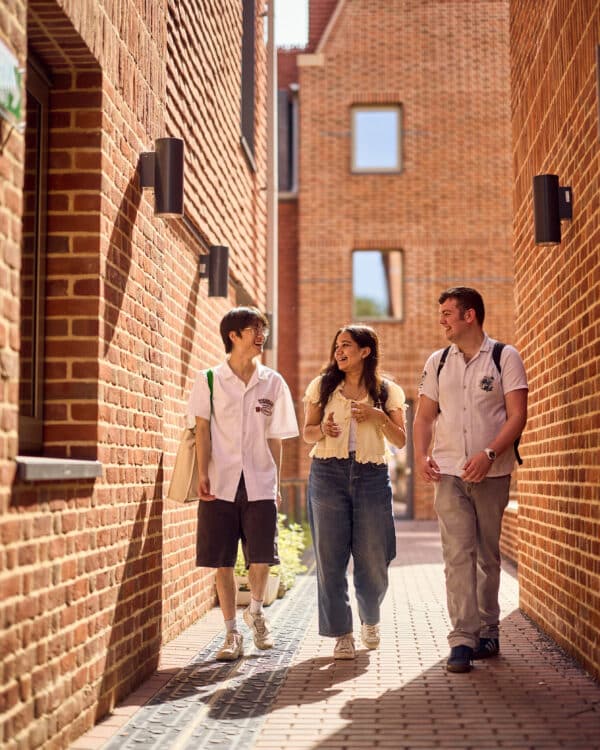
- 200,000 handmade light red bricks produced by Swanage, one of the UK’s last remaining brickmakers still using traditional hand-thrown processes
Photography
If you have any questions about the Hall’s new accommodation, please get in touch with the Development and Alumni Relations team at alumni@seh.ox.ac.uk.
Related News