
Translation at St Edmund Hall
Learn about the work done in translation and translation studies by Modern Language fellows and tutors of St Edmund Hall.
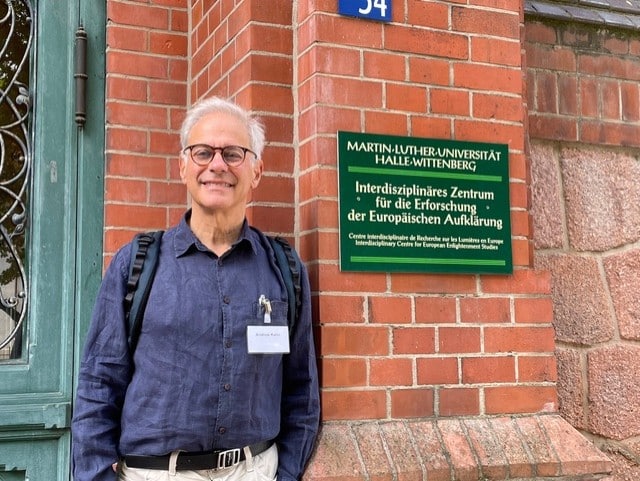
Andrew Kahn is Professor of Russian Literature at the University of Oxford and a Fellow in Modern Languages at St Edmund Hall. The author of numerous books and articles on Russian writers and literary culture and thought, he has introduced and edited translations of a number of works including Montesquieu, Persian Letters, Lermonotov’s Hero of Our Time, Tolstoy’s Death of Ivan Ilyich and other Stories, all for Oxford World’s Classics, Tolstoy’s last novel Resurrection for Everyman’s Classics Library (Penguin) and Ivan Turgenev’s Virgin Soil and Nest of the Gentry, in translations by Contance Garnett. His own translations include numerous lyric poems and in prose the first ever complete English versions of three key works of eighteenth-century Russian literature, Nicholas Karamzin’s Letters of a Russian Traveler, Selected Letters of Catherine the Great with Kelsey Rubin-Detlev; and, with Irina Reyfman, Alexander Radischev’s radical classic Journey from St Petersburg to Moscow, winner of the Best Literary Translation for 2022 from ATSEEL. Questions of translation theoretically and practically play a central role in his ongoing study of the development of conceptual vocabularies in Russian thought, which have also taken him into the digital sphere and the creation of a new resource in collaboration with the ARTFL project (University of Chicago) and a team of LLM researchers. His most recent scholarly book All the World on a Page with Mark Lipovetsky (Princeton University Press) involved commissioning a large number of new translations of Russian lyric poetry from some remarkably gifted writers.
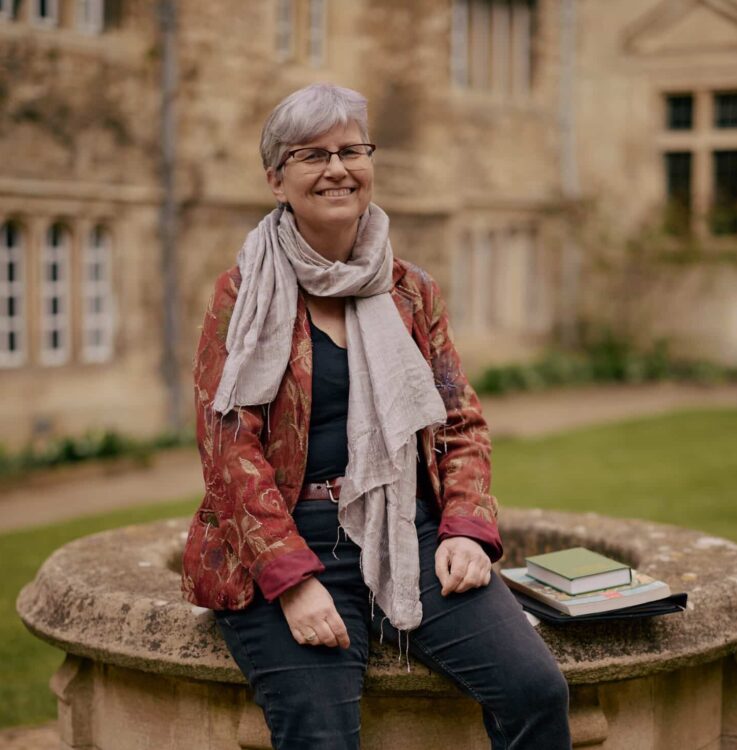
Henrike Lähnemann is a German medievalist with interests in translation theory, bilingual texts, and pre-modern translation practice. She also translates herself regularly pre-modern texts, e.g. Latin and Middle Low German letters by medieval nuns (read extracts on her blog about the convent of Medingen), Reformation pamphlets (a whole series of texts are available open access under the ‘Taylor Editions’ label, among them Martin Luther’s hugely influential ‘Open Letter on Translation’), and early modern song texts (e.g. a 16th century song book or Baroque cantatas). She also collaborates with contemporary poets and translators such as Yoko Tawada and Ulrike Draesner – have a look at their discussion on how to translate medieval love poetry. For a sample lecture on translation theory, have a look at her lecture on Bible translation.
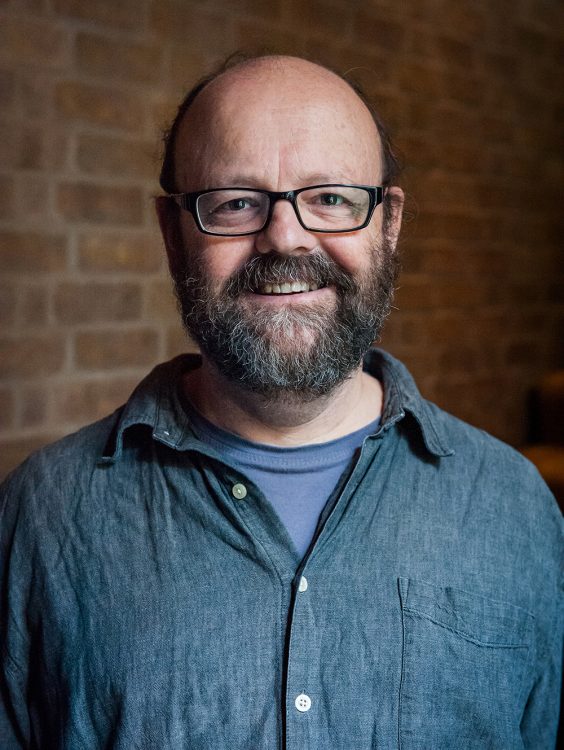
Wes Williams is Professor of French Literature at the University of Oxford and a Fellow in Modern Languages at St Edmund Hall. His books include Pilgrimage and Narrative in the French Renaissance: ‘The Undiscovered Country’ (OUP, 1999), and Monsters and their Meanings in Early Modern Culture; Mighty Magic (OUP, 2012). He is currently working on a study of the long, enduring history of ‘voluntary servitude’, and the medical, legal, and more-than-human reach of the power afforded to the faculty of the imagination in the early modern period.
He also writes, translates, and directs for the theatre, working both with established companies and theatre makers such as Ariane Mnouchkine, the Théâtre du Soleil, Katie Mitchell, Emily Woof, Ed Gaughan, the Almeida, the National Theatre, and the RSC, and a wide range of local and community-based theatre groups. A former Director of TORCH (The Oxford Research Centre in the Humanities), he has a long-standing interest in fostering translation as a form of cultural collaboration, one that can amplify, diversify, and transform our collective intellectual and social resources.