
History
visiting students
History at St Edmund Hall offers Visiting Students the opportunity to explore a wide range of periods, regions and historical approaches through Oxford lectures and small-group tutorials.
Programme Information
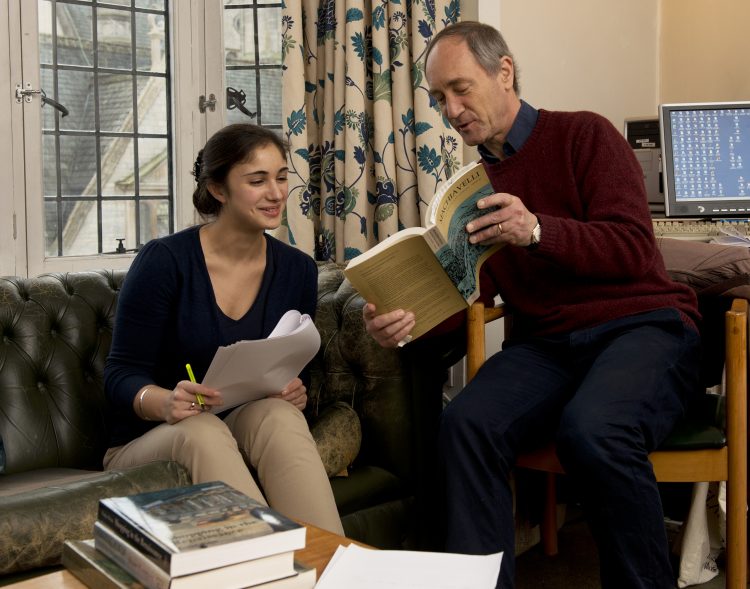
The Oxford History Faculty is celebrated for the broad chronological sweep of its History degree and the enormous number of options offered to its students. The syllabus combines the examination of large regions over extended periods of time with more focused work on smaller areas, shorter periods, and detailed problems. Visiting Students will work extensively with historical sources, and they are encouraged throughout the degree to think about how we study the past.
The College has a friendly and welcoming community of historians: undergraduates, postgraduates and tutors. We encourage our undergraduates to cultivate their individual interests and preferences, and offer them the widest practicable choice of subjects.
Visiting Students studying History at St Edmund Hall can choose from broad Outline Courses and more specialised Further Courses.
Visiting Students should consult the list of Outline and Further Courses available below. Outline Courses may be taken as either Primary (Major) or Secondary (Minor) courses, while Further Courses are normally taken as Primary (Major) courses.
Students may normally choose one Further Course for the year, to be taken in Hilary Term only.
Further Courses are especially subject to change and places may be limited. If you are interested in taking a particular Further Course, we recommend discussing this with your Study Abroad supervisor before applying.
Outline Courses
History of the British Isles
- The Early Medieval British Isles, 300-1100
- The British Isles in the Central Middle Ages, 1000-1330
- The Late Medieval British Isles, 1330-1550
- Reformations and Revolutions, 1500-1700
- Liberty, Commerce and Power, 1685-1830
- Power, Politics and the People, 1815-1924
- Changing Identities, 1900-present
Course descriptions for the British History courses can be found on the History Faculty website
European & World History
- The World of Late Antiquity, 250-650
- The Early Medieval World, 200-1000
- The Central Middle Ages, 900-1300
- The Global Middle Ages, 500-1500
- The Late Medieval World, 1300-1525
- Early Modern Europe, 1500-1700
- Eurasian Empires, 1450-1800
- Enlightenments and Revolutions: Europe 1680-1848
- From Independence to Empire: America 1763-1898
- A Liberal Century? Europe 1825-1925
- Imperial and Global History, 1750-1930
- The Making of Modern America since 1863
- Europe Divided, 1914-1989
- The Global Twentieth Century, 1930-2003
Historical Methods
- Approaches to History
- Historiography
- Foreign Texts (Texts in a Foreign Language)
- Quantification in History
Course descriptions for the Historical Methods courses can be found on the History Faculty website
Further Courses
Please note that the following courses can only be taken in Hilary Term.
- Anglo-Saxon Archaeology c.600-750: Society and Economy in the Early Christian Period
- The Near East in the Age of Justinian and Muhammad 527-700
- The Carolingian Renaissance
- The Crusades c.1095-1291
- Culture and Society in Early Renaissance Italy 1290-1348
- Flanders and Italy in the Quattrocento 1420-1480
- The Wars of the Roses, 1450-1500
- Literature and Politics in Early Modern England
- The Iberian Global Century, 1550-1650
- Gender and Protestant Cultures in England, 1558-1659
- Writing in the early Modern Period, 1550-1750
- Court Culture and Art in Early Modern Europe, 1580-1700
- War and Society in Britain and Europe 1650-1815
- The Metropolitan Crucible, London, 1685-1815
- Imperial pathologies: race, medicine and identity in the British Empire c.1720-1850
- Histories of Madness and Mental Healing in a Global Context
- Constructing the First New Nation: A Political History of the United States, 1781-1803
- Nationalism in Western Europe, 1799-1890
- Intellect and Culture in Victorian Britain
- The Authority of Nature: Race, Heredity and Crime, 1800-1940
- The Middle East in the Age of Empire, 1830-1940
- Transformations and Transitions in African History since c1800
- Modern Japan, 1868-1972
- Nationalism, Politics and Culture in Ireland, 1870-1921
- A Global War 1914-1920
- China since 1900
- The Soviet Union, 1924-1941
- Culture, Politics and Identity in Cold War Europe, 1945-68
- The Jews in Twentieth-Century Poland: History and Memory
- Britain at the Movies: Film and National Identity since 1914
- Women’s Liberation: Feminism in Britain, 1969-1990
- Scholastic and Humanist Political Thought
- Political and Social Thought in the Age of Enlightenment
- Political Theory and Social Science, 1780-1920
- Postcolonial Historiography: Writing the (Indian) Nation
- Modern Mexico
Our Tutors
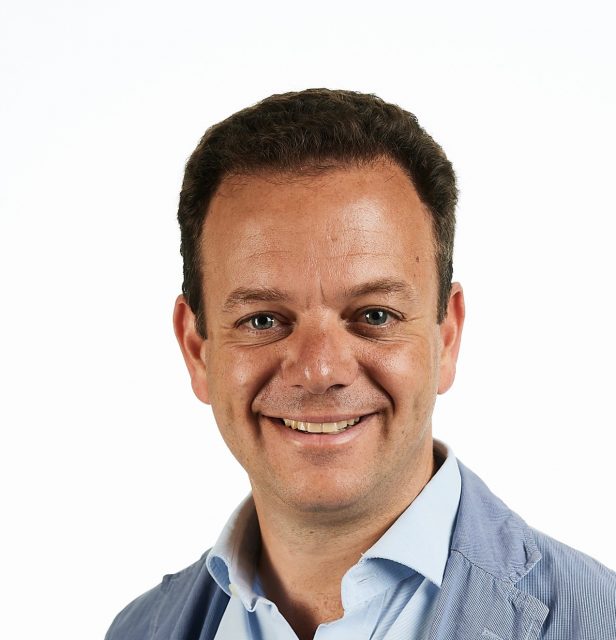
Filippo
de Vivo
Professor of Early Modern History and River Farm Foundation Tutorial Fellow in History
Filippo de Vivo studied in Milan, Cambridge and Paris, and worked for eighteen years at Birkbeck before joining Teddy Hall in October 2021. He teaches early modern European and world history, with special emphasis on Italy and the Mediterranean.

Aisha
Djelid
Junior Research Fellow
Dr Aisha Djelid is the Broadbent Career Development Fellow in American History at the Rothermere American Institute and a Junior Research Fellow at St Edmund Hall.
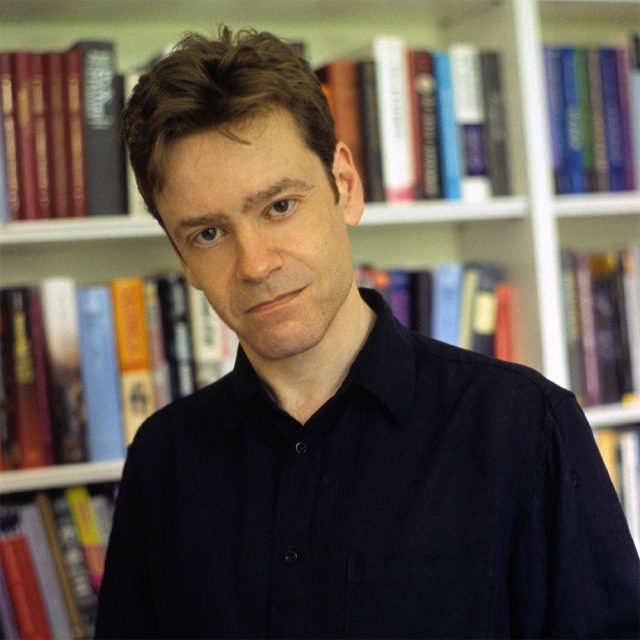
David
Priestland
Professor of Modern History and Tutor in Modern History
David Priestland is Professor of Modern History at St Edmund Hall and is interested in the history of two of the most influential global ideologies of the twentieth and twenty-first centuries, communism and market liberalism (‘neoliberalism’), especially in the communist and post-communist worlds.
Visiting Students
More information about becoming a Visiting Student at St Edmund Hall – including finance, accommodation and how to apply